
Predictive Analytics and School Improvement Blog

Ideas and insights for school district leaders.

Subscribe to RSS

Featured Case Study

More Posts

The IPA Model Student Handbook, But Even Smarter
AI AssistantAnnouncement

The IPA Model Student Handbook, But Even Smarter

IPA and ECRA are making the Online Model Student Handbook even more useful with an AI Assistant that helps school leaders find information and keep their handbooks current in less time.

ECRA Welcomes Dr. Michael Lubelfeld as Vice President
Announcement

ECRA Welcomes Dr. Michael Lubelfeld as Vice President

ECRA welcomes Dr. Michael Lubelfeld as Vice President. The nationally recognized educational leader, author, and former superintendent will serve as a resource to superintendents, boards of education, and district leadership teams.

IASA’s Leadership Matters Spotlights the EL Consortium
Announcement

IASA’s Leadership Matters Spotlights the EL Consortium

IASA’s Leadership Matters highlights the Illinois consortium of more than 100 school districts working together to understand the impact of English learner and bilingual program models, with ECRA as data and research partner.

IL – Benchmark Update August 2025
Announcement

IL – Benchmark Update August 2025

Illinois approved new proficiency benchmarks for the IAR, ACT, and ISA. Here is how ECRA will apply them across the School Improvement platform and what they mean for your proficiency and growth data.

Using Data to Build Trust During a Winning School District Referendum Process
Case StudyData Brief

Using Data to Build Trust During a Winning School District Referendum Process

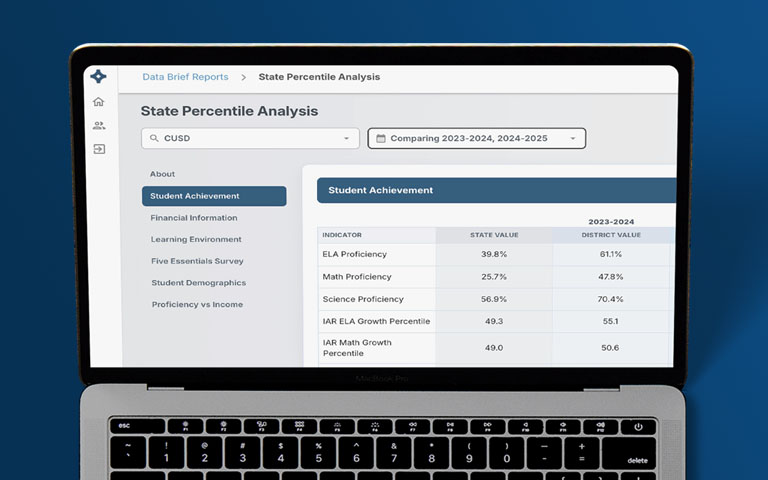
Transparency, clarity, and trust are critical to successfully navigating a school district referendum. Whether the goal is to invest in facilities, support academic programming, or support staff and students, district leaders are often faced with the challenge of helping their communities understand both the why and the value behind the ask. In this post. learn how New Glarus School District in Wisconsin benefitted from ECRA’s State Percentile Analysis and Comparative District Analysis data briefs.