ECRA School Improvement icon

School Improvement

Predict What's Possible

ECRA’s School Improvement solution offers K12 district leaders a sophisticated approach that combines predictive analytics and evidence-based processes to ensure resources are directed toward what truly matters for students.

Book a Demo Why School Improvement?
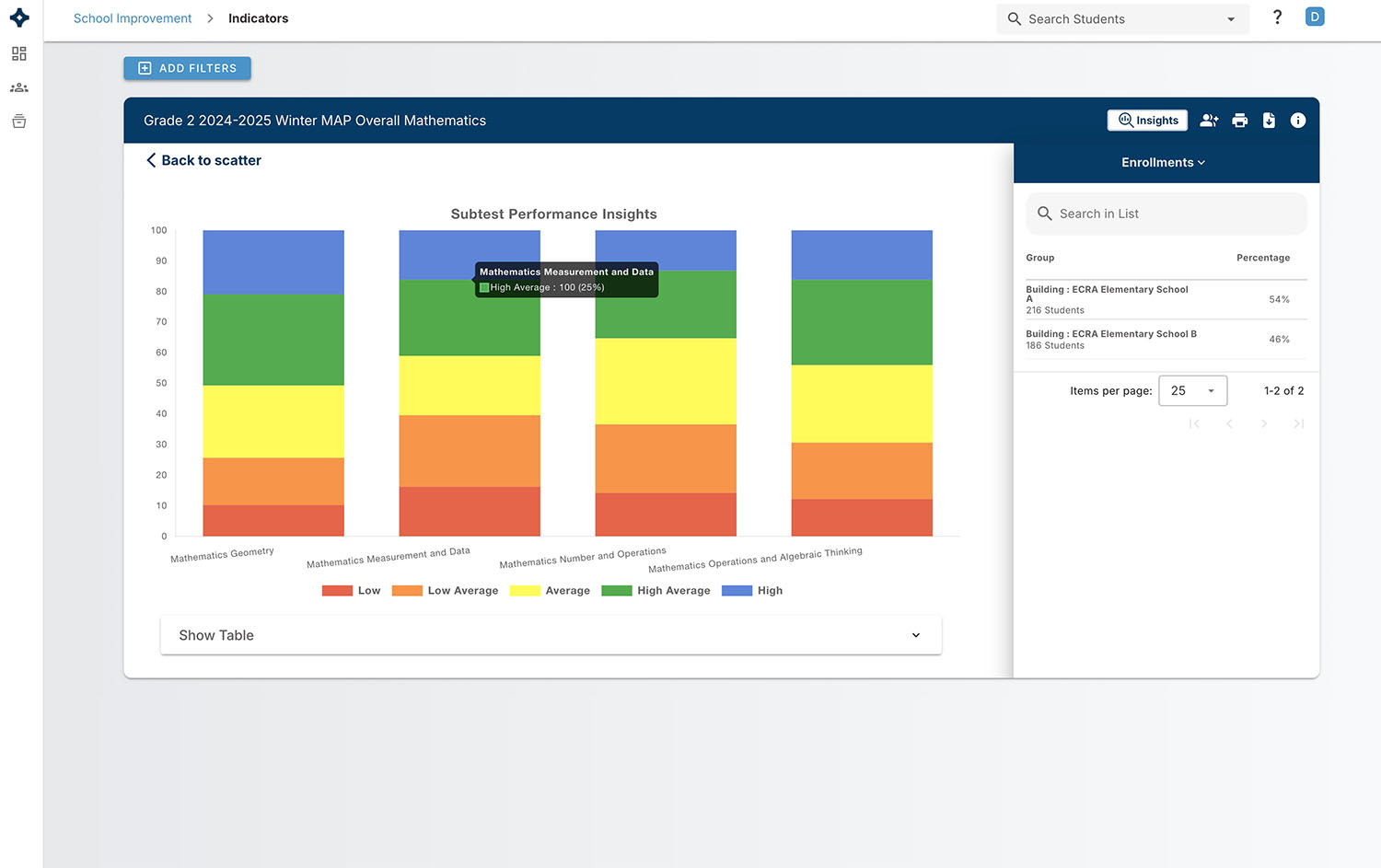
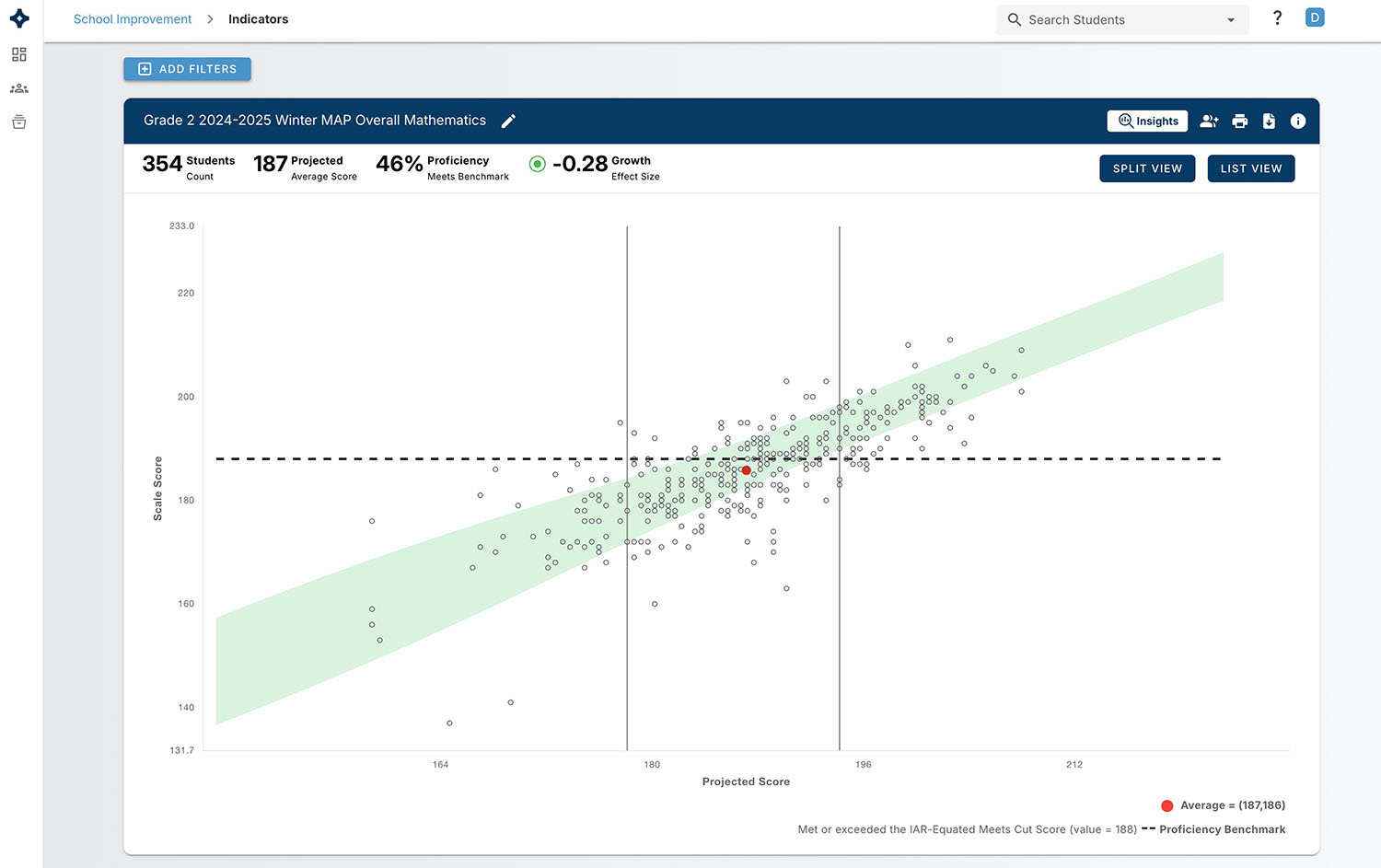
ECRA School Improvement application showing a student performance report ECRA School Improvement application showing a chart of student results

School Improvement helps districts increase student performance, reduce costs, and save administrators time.

Gain a one- to three-year head start in delivering interventions and resources to students while adopting a more automated, scientific approach to setting annual school improvement goals. Identify programs that are not producing meaningful results to help reduce costs, and save administrators time by combining evidence across multiple data points into a single, easy-to-understand effect size.
Students raising their hands in a classroom Teacher and students planting seeds Teacher smiling

ECRA's Unique Approach

Projected vs. Actual Framework

School Improvement goes beyond measuring whether student performance increased. ECRA’s Projected vs. Actual Framework compares projected outcomes with actual results, so district leaders can understand whether students performed above, at, or below expectations. This provides a more meaningful way to evaluate the impact of programs, interventions, and investments, helping leaders identify what is working, where adjustments are needed, and where resources can have the greatest impact.

ECRA School Improvement icon

Why School Improvement?

School Improvement creates a continuous, data-informed improvement cycle

  1. Predict SuccessSee where your district’s students are heading before they get there.
  2. Set GoalsAdopt a more automated and scientific approach to setting school improvement goals.
  3. Take ActionFocus school resources and interventions where they matter most.
  4. Evaluate ImpactMeasure progress against projections and adjust throughout the school year.

ECRA’s School Improvement solution places predictive analytics at its core, giving K12 district leaders a personalized projection for every student and informing a continuous improvement cycle at both the district and school level.

Predict Success

Use each student’s academic history to understand where they are headed and what future performance is possible. ECRA’s predictive analytics for school improvement establish personalized projections based on each student’s unique learning trajectory. These projections give K12 educators a clearer picture of expected growth and help identify opportunities for student support before outcomes occur.

Set Goals

Turn predictions into meaningful school improvement goals for students, schools, and the district. ECRA helps district leaders establish goals that are ambitious, realistic, and grounded in each student’s academic history. With a shared definition of success, district and school teams can align improvement efforts around measurable student outcomes.

Take Action

Put your school improvement plan into action by focusing resources, programs, and interventions where they can have the greatest impact on student growth. Personalized projections help educators understand which students are on track and where additional support may be needed. This allows schools to act with greater precision instead of relying on one-size-fits-all approaches.

Evaluate Impact

Measure progress throughout the school year to understand whether school improvement efforts are producing the intended results. ECRA helps district leaders compare actual student performance with personalized expectations, making it easier to identify progress and areas that need attention. Use those insights to adjust strategies, refine goals, and begin the continuous improvement cycle again.


What does School Improvement predict?

ECRA’s predictive analytics use students’ historical academic data to develop personalized projections of future performance. Depending on the data available within a district, predictive models can provide an earlier look at student outcomes, from state assessments to AP Potential and college and career readiness.

College & Career Readiness

Projecting postsecondary success.

  • ACT composite scores
  • ACT English scores
  • ACT Math scores
  • ACT Reading scores
  • ACT Science scores
  • SAT scores
  • AP Potential
  • College-readiness benchmarks
  • Postsecondary readiness indicators

Academic Performance

Forecasting achievement and growth.

  • Future reading performance
  • Future mathematics performance
  • Future science performance
  • Future academic achievement
  • Expected student growth
  • Grade-level performance
  • Performance against district-defined academic targets

State Assessments

Projecting performance on state tests.

  • State assessment scores
  • English Language Arts performance
  • Mathematics performance
  • Science performance
  • State proficiency levels
  • Probability of meeting or exceeding proficiency
  • Future state assessment performance

Early Indicators

Identifying opportunities sooner.

  • Students projected to meet academic goals
  • Students projected to exceed academic goals
  • Students projected to fall below academic goals
  • Students who may benefit from earlier intervention
  • Students on track for future proficiency
  • Students at risk of falling below future proficiency

District-Defined Outcomes

Aligned to your local priorities.

  • Locally selected assessments
  • District benchmark assessments
  • District-defined performance targets
  • Other measurable academic outcomes for which sufficient historical data are available

ACADEMIC RETURN ON INVESTMENT

How do you know which programs are having the greatest impact on student outcomes?

Academic ROI quantifies the impact of a program or intervention on student growth above and beyond growth that would have happened anyway, so district leaders can see what is working and where adjustments may be needed.

Turn Evidence Into Action With School Improvement

ECRA’s School Improvement solution helps district and school leaders move beyond compliance-driven planning and focus on what will make the greatest impact for students. By using predictive analytics, clear priorities, and actionable insights, teams can align resources, monitor progress, and make improvement decisions with confidence.

Explore More FAQs

What is ECRA’s School Improvement solution?

ECRA’s School Improvement solution helps K12 school districts evaluate the effectiveness of their strategies by using predictive analytics and Academic Return on Investment. It allows district leaders to connect actions to outcomes, reflect on performance, and plan future initiatives based on evidence, not assumptions.

How does School Improvement support district planning?

School Improvement provides a structured, data-informed approach to strategic reflection and future planning. By using predictive analytics, districts can evaluate the likely impact of past and current initiatives, helping leadership teams identify what worked, what didn’t, and where to focus resources for greater student success.

Who is School Improvement for?

School Improvement is designed for K12 district leaders who are responsible for strategic planning, academic performance, and continuous improvement. This includes superintendents, assistant superintendents, directors of teaching and learning, and school improvement teams who want to align their efforts with measurable student outcomes.

What role does Academic Return on Investment play in School Improvement?

Academic Return on Investment, or academic ROI, is a key feature of ECRA’s School Improvement solution. It quantifies the impact of a program or intervention on student growth, giving district leaders evidence they can use to make more informed, cost-effective decisions about which programs and strategies to continue or refine.

Is School Improvement difficult to use?

No, ECRA’s School Improvement solution is designed to be clear, intuitive, and aligned with how district leaders already approach planning and reflection. Our team works closely with you during setup to ensure your data is organized around your goals, and we provide support every step of the way. You don’t need to be a data expert. Just bring your knowledge of your district, and we’ll help translate that into insight you can use.