School district leaders are asked to make high-stakes decisions with limited time and imperfect information. Whether planning for staffing needs, setting student achievement goals, or allocating resources, the pressure to get it right is ever present. That’s where predictive analytics becomes not just helpful, but essential.
At ECRA, we believe superintendents shouldn’t have to guess about the future. Predictive analytics empowers district leaders to plan ahead with confidence by using historical data to forecast likely outcomes. This means better decisions, better strategies, and ultimately, better outcomes for students.
What Is Predictive Analytics in Education?
Predictive analytics is the use of existing data to model and anticipate future events. In the context of education, this means predicting student achievement, graduation rates, or the potential impact of a new program.
Unlike traditional reporting, which looks backward, predictive analytics is forward-facing. It helps answer questions like:
- Where are we likely to be in one year if nothing changes?
- How much growth can we reasonably expect for a group of students?
- Which interventions are likely to have the greatest return?
- Which programs or interventions should accelerate growth on specific assessments or metrics?
Why It Matters for Superintendents
Superintendents are expected to provide a clear vision, make evidence-based decisions, and communicate progress effectively with their boards and communities. Predictive analytics supports all three.
Strategic Planning Becomes Grounded in Evidence
Instead of setting goals based solely on state mandates or past performance, predictive models help set expectations that are both ambitious and realistic, and most importantly, grounded in the expectations of your students.
Accountability Is More Meaningful
It’s not enough to report whether a goal was met. Districts need to understand whether the outcomes they’re seeing were better, worse, or about what was expected. Predictive analytics makes this possible by measuring your actual performance against what was projected, so that you can determine whether actual improvement is working.
Resources Can Be Aligned to What Works
When districts understand which programs are likely to generate the highest academic return on investment, they can focus resources where they’ll do the most good. This allows you to more precisely place students in interventions and programs based on their instructional needs, and then more accurately measure the effectiveness of the programming.
Predictive Analytics in Action
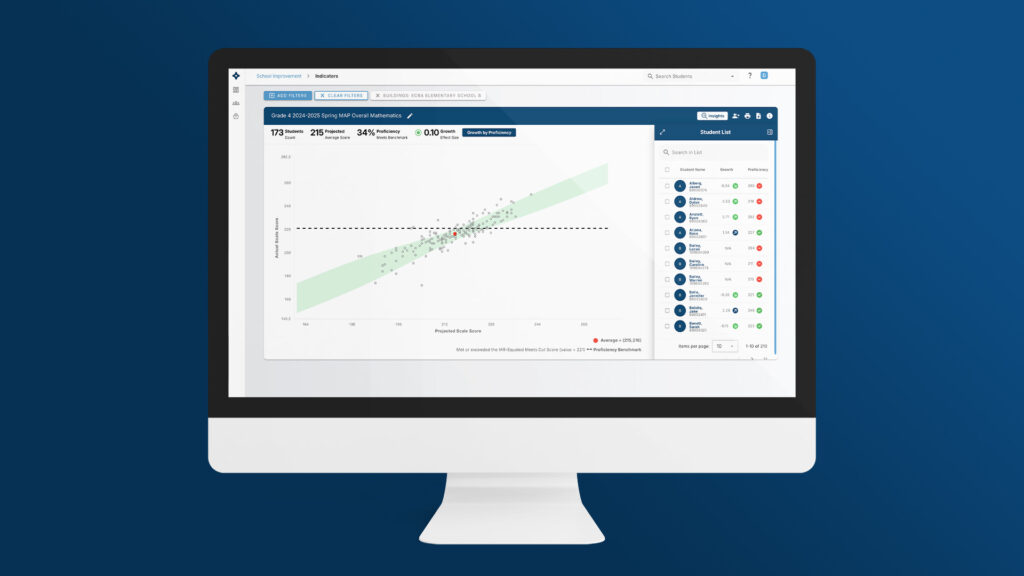
ECRA’s School Improvement solution leverages predictive models to help districts plan strategically and evaluate impact in real time. District leaders can:
- See expected vs. actual outcomes for student groups
- Forecast the potential impact of interventions
- Make mid-course adjustments based on emerging data, and move students into interventions based on need, and exit students out of them because of actual performance
145StudentsCount
187ProjectedAverage Score
59%ProficiencyMeets Benchmark
+0.40GrowthEffect Size
- Student
- Average (187, 190)
- Projected range
- Proficiency benchmark
This level of insight not only improves planning, but builds trust with boards and communities by showing progress through a professional, evidence-based lens. See how West Aurora School District 129 uses predictive analytics to target instruction.
You Don’t Need a Data Science Degree
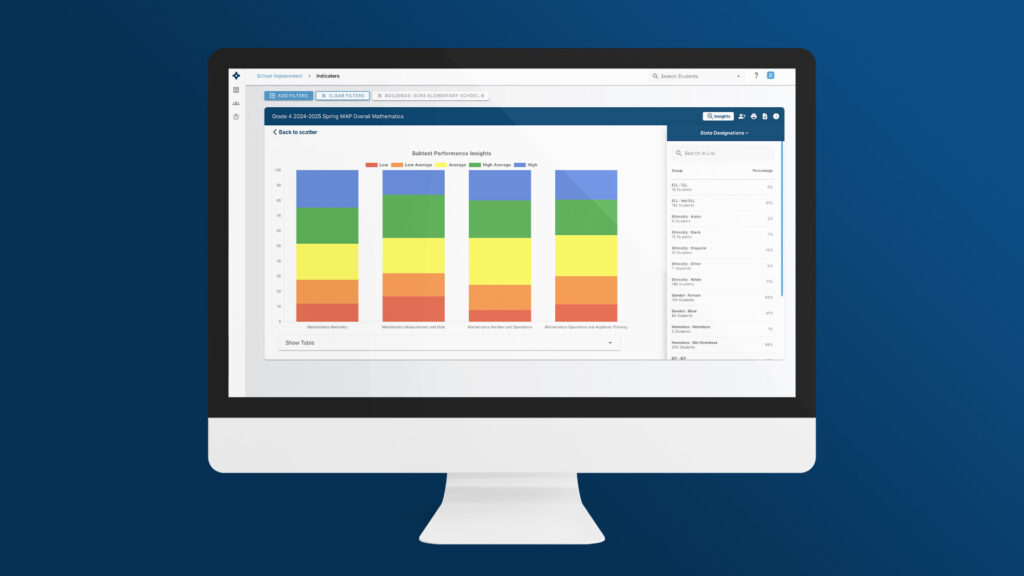
One of the biggest misconceptions about predictive analytics is that it’s only for statisticians or researchers. At ECRA, we translate complex data into simple, visual tools that support decision-making without overwhelming users. Whether you’re reviewing districtwide performance or evaluating a single program, our solutions provide the clarity you need to lead effectively.
The Bottom Line
Predictive analytics isn’t about replacing experience or intuition. It’s about strengthening it. For superintendents, it offers a way to lead with clarity, precision, and confidence in an increasingly data-rich environment. When decisions are informed by predictive analytics, districts can shift from reactive to proactive, and from uncertainty to strategy.
ECRA’s School Improvement online application is a powerful tool that puts predictive analytics directly into the hands of district leaders.
Frequently Asked Questions
What is predictive analytics in education?
Predictive analytics is the use of existing data to model and anticipate future events. In education, this means predicting student achievement, graduation rates, or the potential impact of a new program.
How is predictive analytics different from traditional reporting?
Traditional reporting looks backward at what has already happened. Predictive analytics is forward-facing and helps district leaders anticipate likely outcomes, such as where the district is likely to be in one year if nothing changes.
Why does predictive analytics matter for superintendents?
Predictive analytics helps superintendents set goals grounded in evidence, measure actual performance against what was projected, and align resources to what works.
Do superintendents need a data science degree to use predictive analytics?
No. ECRA translates complex data into simple, visual tools that support decision-making without overwhelming users.